Recent field developments indicate that the “Yatziv” settlement in Beit Sahour is undergoing a rapid and significant new phase of expansion. Field observations confirm the presence of 30 additional caravans currently occupied by settlers, alongside intensified construction activity, including increased movement of excavators and construction trucks along the road leading to the settlement. New infrastructure and residential facilities have also been established, including water tanks and recreational facilities, further indicating the continued transformation of the site into a permanent settlement. A new banner has also been installed along the access route, welcoming arrivals to “Shdema,” the settlement’s former designation as a military outpost. The continued use of the former name is notable given the site’s transition from the “Shdema” military outpost to the “Yatziv” settlement. The combination of additional occupied caravans, intensified construction activity, expanding road infrastructure, and supporting facilities demonstrates that the settlement is no longer developing as an isolated outpost, but is undergoing a process of sustained civilian consolidation.
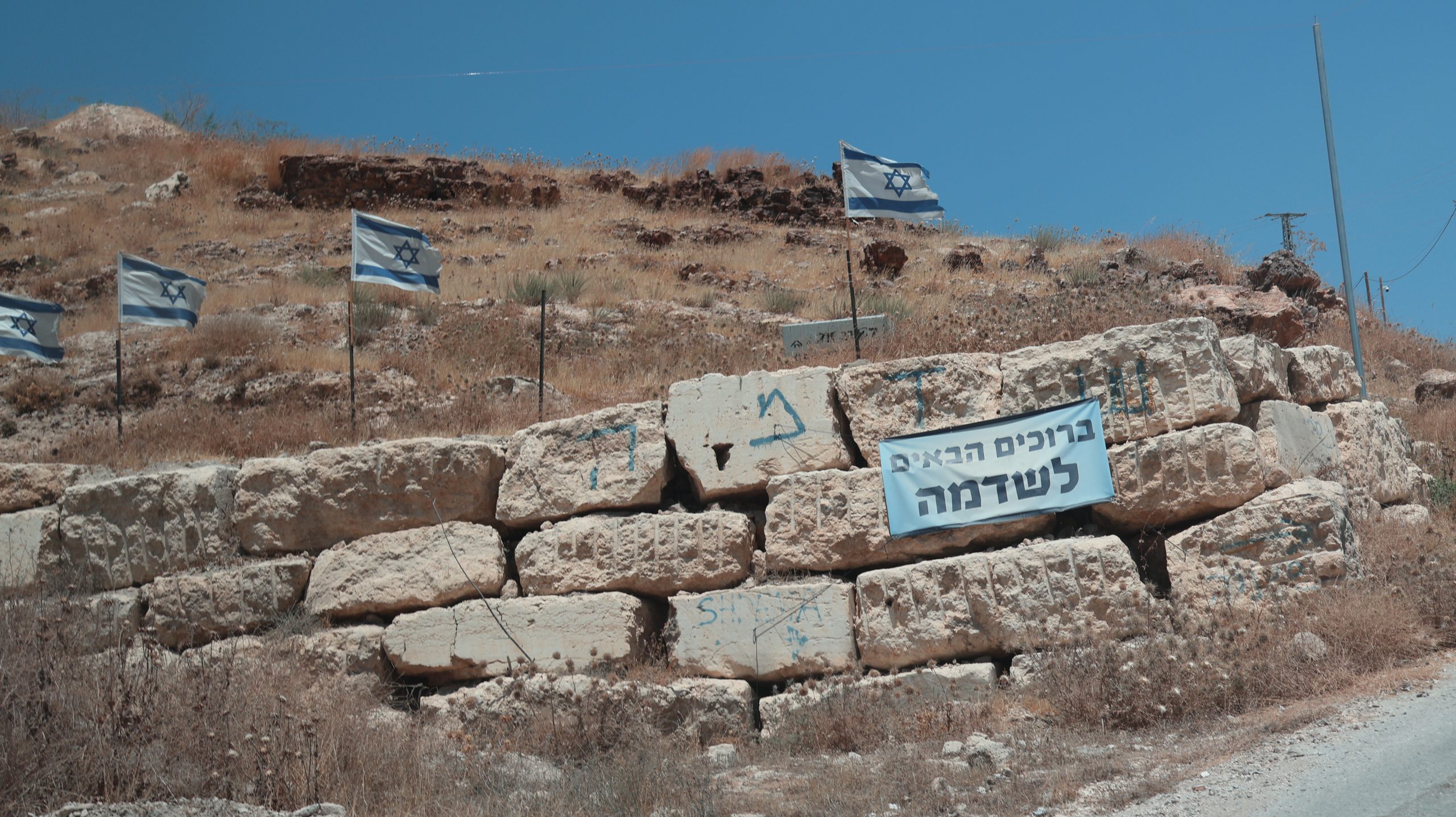 (Ush Ghrab, Settler banner at the entrance to “Yatziv”, BIHR 2026)
The latest developments follow the inauguration of the “Yatziv” settlement formerly known as the “Shdema” military outpost, by Israeli Finance Minister Bezalel Smotrich on 20 January 2025, when approximately 30 caravans were reportedly established for settler families. The verification of an additional 30 occupied caravans in July 2026 therefore indicates a substantial expansion of the settlement’s residential capacity since its inauguration. This development is consistent with a broader pattern in which settlement outposts initially established through military or agricultural presence are progressively expanded through caravans, residential structures, roads, utilities, and other civilian infrastructure, gradually creating permanent facts on the ground.
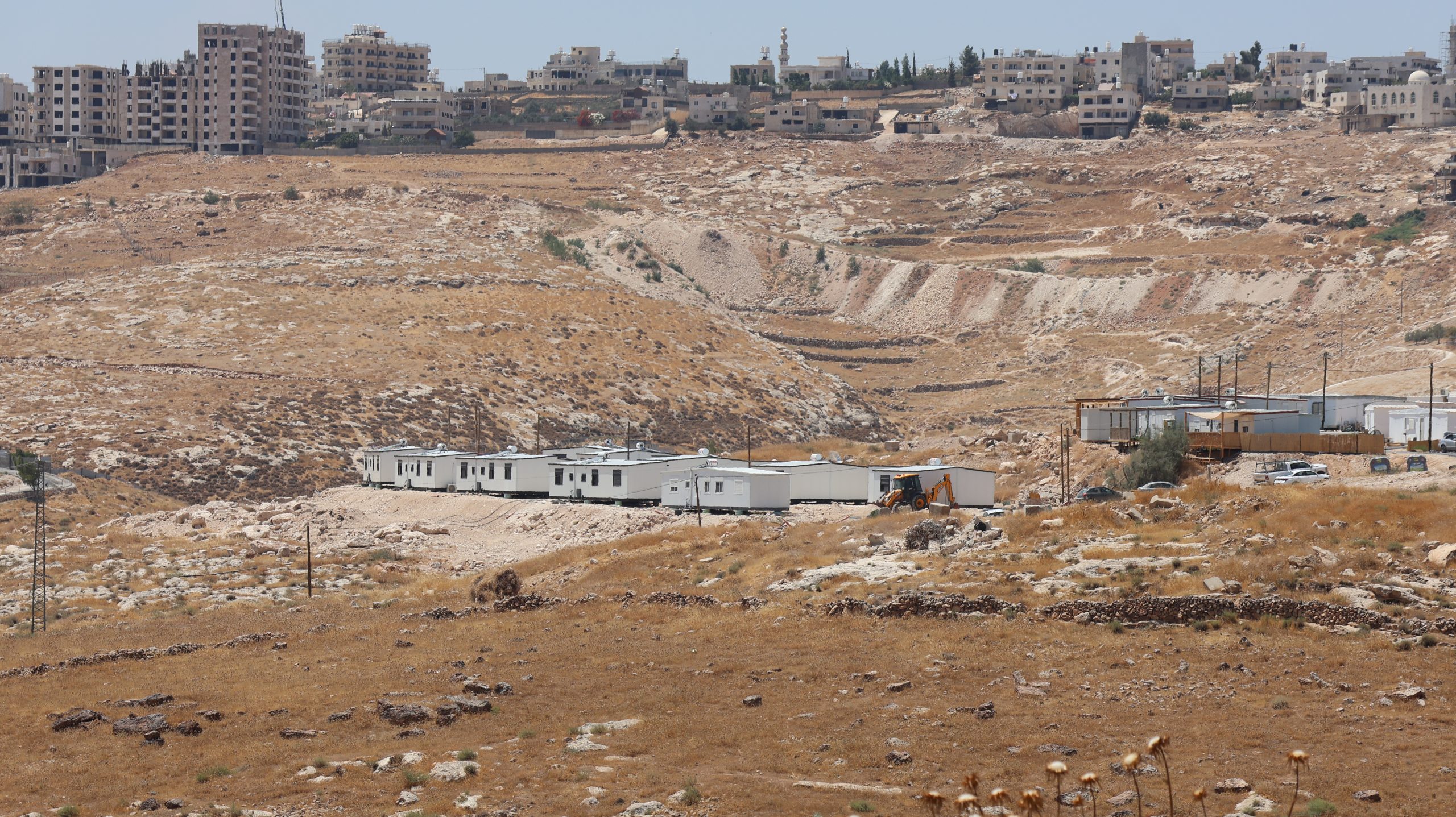 (30 new caravans in “Yatziv”, BIHR 2026).
The settlement enjoys a strategic location that forms a key link between the “Gush Etzion” settlements, which strengthens the settlement expansion deep into the eastern countryside of Bethlehem. Extending the road network towards the former Ush Ghrab checkpoint creates physical contiguity between settlement infrastructure while simultaneously restricting access, movement, and land use for Palestinians. Additionally, investing in playgrounds alongside basic water infrastructure demonstrates an intention to permanently entrench families and stimulate population growth. Furthermore, the urban expansion surrounding the settlements and their associated road networks leads to the systematic appropriation of agricultural land, exacerbating the economic and geographic fragmentation of the local Palestinian population.
Legal Analysis
The settlement’s geographical and structural dimensions are complemented by a legal context that condemns this expansion. The International Court of Justice, in its advisory opinion issued in July 2024, affirmed that the Israeli presence in the occupied Palestinian territory is illegal. This opinion places all related policies, including settlement expansion, infrastructure development, and restrictions on access to land within the framework of an illegal occupation.
Accordingly, the West Bank is subject to international humanitarian law and human rights law, particularly the Fourth Geneva Convention. These laws prohibit an occupying power from imposing its sovereignty or altering the character of occupied territory except in cases of imperative military necessity, which does not apply to settlement construction. Consequently, all Israeli measures to alter the character of the territory are illegal.
The expansion of the “Yatziv” settlement is a clear violation of Article 49 of the Geneva Convention, which prohibits the transfer of the occupying power’s population into occupied territory. These violations are directly evident on the ground in Beit Sahour, where settlement expansion and land confiscation undermine local development and encroach upon areas designated for urban and agricultural expansion. This situation constitutes a blatant violation of the economic and social rights of the indigenous population, including the right to property, the right to self-determination, and the right to sustainable development.